
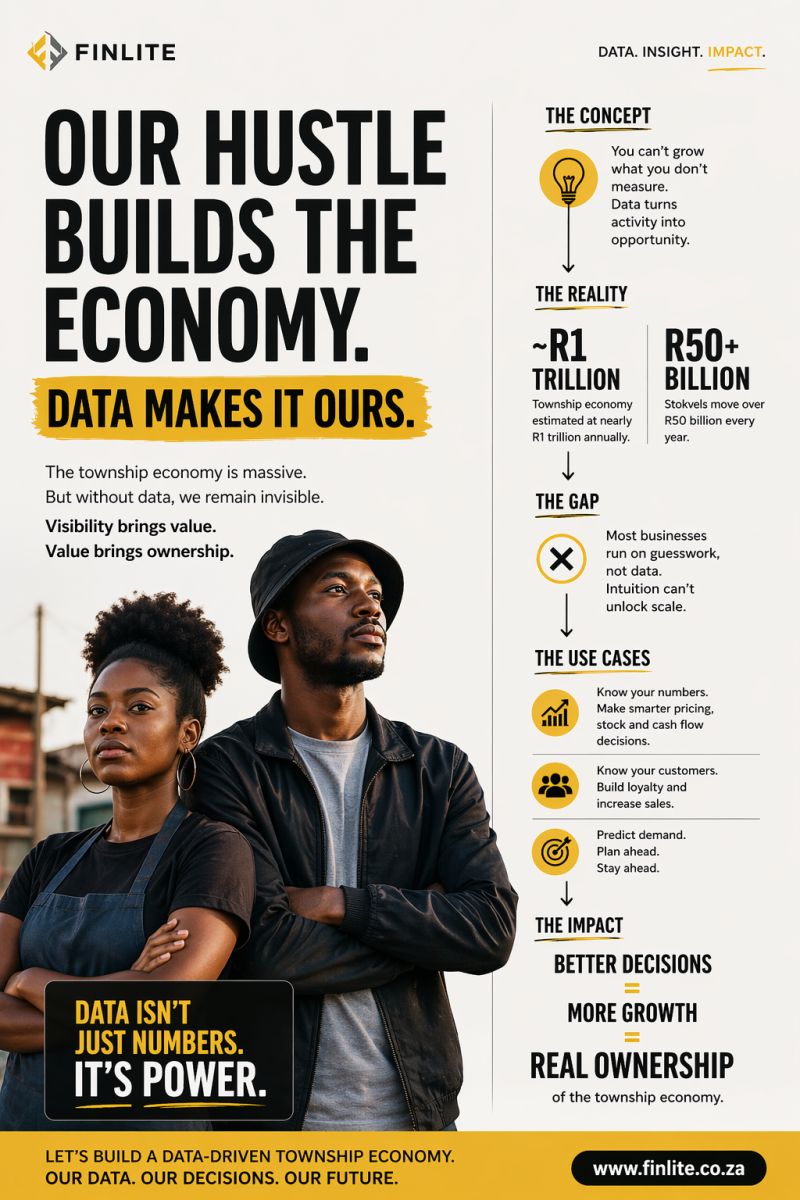
What we see on the surface of the township economy is only a fraction of what is really happening.
Walk through any township and you’ll notice the visible signs of economic life — spaza shops on street corners, hair salons operating from backrooms, food vendors serving daily customers, and small service providers hustling to meet demand. But this visible layer is just the tip of the iceberg.
Beneath it exists a vast, dynamic, and highly resilient informal system that is often overlooked, underestimated, and under-supported.
This system contributes an estimated R1.5 to R2 trillion to South Africa’s GDP, accounting for up to 30% of total economic activity. It provides livelihoods to more than 7 million South Africans, making it one of the largest employment engines in the country.
There are over 2.5 million informal businesses operating daily — from spaza shops and street vendors to home-based enterprises and micro-service providers. Together, they move billions of rands through both cash and increasingly digital transactions. Yet, much of this activity remains untracked, undocumented, and therefore undervalued.
Take stokvels as an example. These community-based savings and investment groups circulate between R50 billion and R100 billion annually. That’s a significant pool of capital — but most of it exists outside formal financial systems, limiting its ability to scale, attract investment, or be leveraged for broader economic growth.
This is not a marginal economy.
It is a parallel engine of growth — one that has remained historically invisible, not because it lacks scale, but because it lacks structured data.
And data is everything.
Without reliable data, this economy remains disconnected from:
- Access to funding and investment
- Formal financial tools and products
- Strategic business support and scaling opportunities
- Policy recognition and targeted development
In simple terms: what cannot be measured cannot be fully supported or grown.
From Conversations to Infrastructure: The Role of Lwazi AI
This is where innovation must step in — not just to observe the township economy, but to actively enable and structure it.
Lwazi AI is evolving beyond its initial role of providing multilingual financial literacy conversations. It is becoming something far more powerful: infrastructure for the informal economy.
What does that mean in practice?
It means putting:
- Skills development directly into people’s hands
- Coaching and mentorship within reach of entrepreneurs
- Monitoring and evaluation tools into everyday business activity
- Data collection and insights into previously invisible transactions
Lwazi AI is designed to serve:
- Youth navigating entry into economic participation
- Stokvels managing collective capital
- Township-based organisations driving local impact
- Small businesses seeking growth and sustainability
- Social enterprises building community solutions
By embedding intelligence and data into daily economic activity, it begins to formalise without disrupting — capturing value without destroying the flexibility that makes the informal sector so resilient.
Why This Matters Now
South Africa cannot afford to ignore an economy of this scale.
If properly supported, structured, and digitised, the township economy has the potential to:
- Unlock massive new investment opportunities
- Drive inclusive economic growth
- Reduce unemployment at scale
- Strengthen community-based financial systems
- Build sustainable, locally-driven economies
But this transformation starts with one key shift:
Turning visibility into data — and data into opportunity.
A Call to Action
The future of the township economy is not about replacing what already works. It’s about enhancing it with the tools it has been missing.
Digitisation is not a luxury — it is the bridge between survival and scalability.
The real question is no longer whether the township economy matters.
The real question is:
Are we ready to build the systems that allow it to reach its full potential?
Author: Andile Fulane, CEO – Finlite: https://www.linkedin.com/in/andile-f-314a2929?utm_source=share_via&utm_content=profile&utm_medium=member_android
#TownshipEconomy #DataEconomy #DigitiseMzansiCampaign